
Managing distributed teams across the GCC: Culture, trust, and hybrid complexity
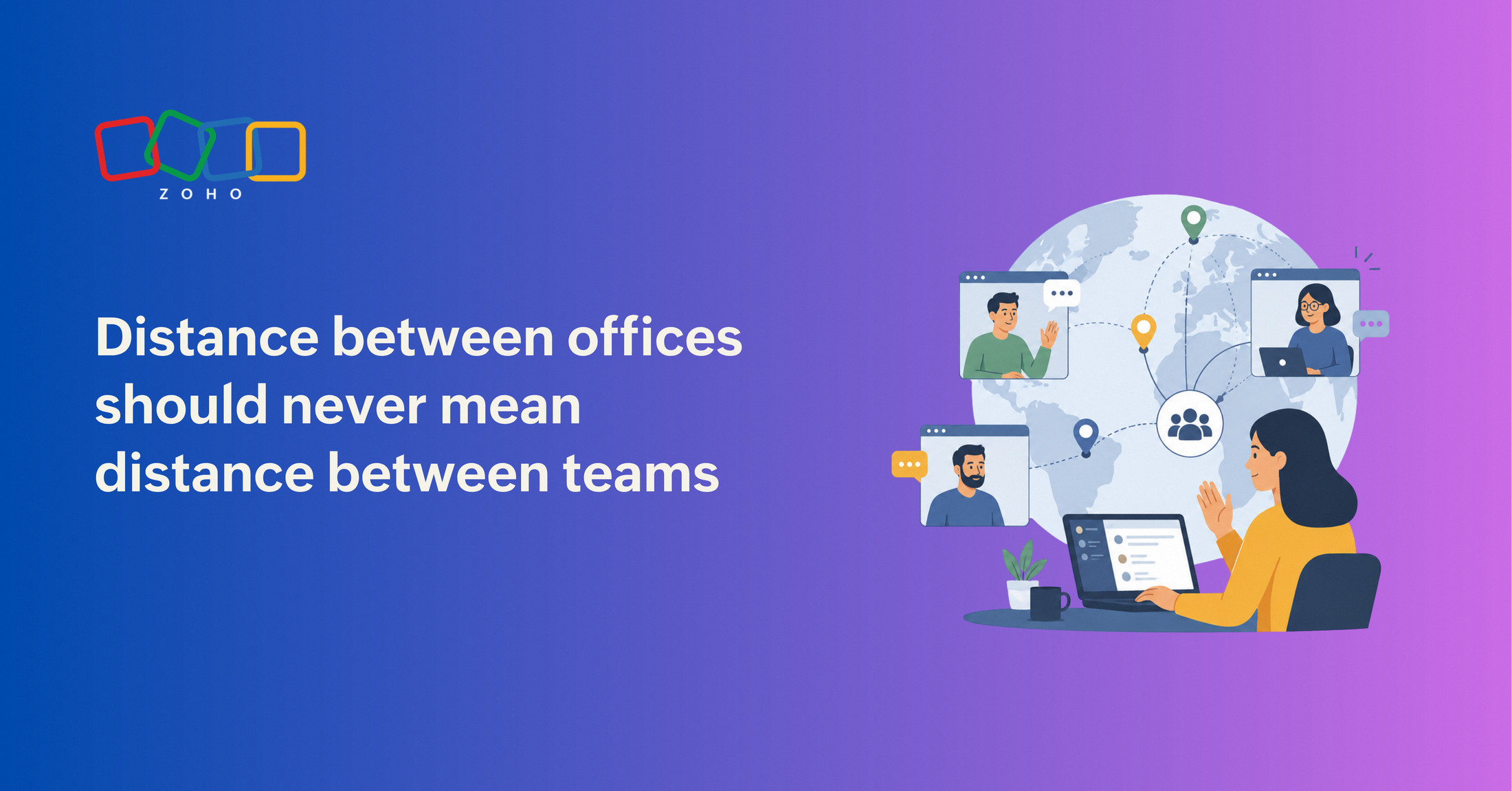
For leaders, people managers, and HR professionals building distributed teams across the Gulf
Gulf businesses are adding cities faster than they’re adding the people, processes, and infrastructure needed to support them. The commercial logic is sound, but the human side of the business often lags by 12 to 18 months, and that lag is where culture fractures.
The speed is the point. The GCC is one of the fastest-growing business environments in the world: business registrations in Saudi Arabia jumped 48% year-on-year in Q1 2025 alone. But growth that outpaces the systems designed to hold distributed teams together leaves people working for the same company without feeling like they're part of the same organisation. It creates a specific kind of organisational damage: teams that are technically employed by the same business but have no shared experience of what it actually feels like to work there.
This is a leadership problem before it’s an HR problem. The structures, rhythms, and habits that make trust possible across distance have to be designed.
The visibility gap in distributed GCC teams
In any multi-location organisation, career opportunity follows visibility. The people closest to where decisions are made, physically and relationally, are seen first for promotions, stretch projects, and sponsorships. The people in satellite offices, secondary cities, or newer markets get the work but not the access.
In the GCC, this problem has a specific shape: strategic decisions are often concentrated at the head office, while teams in other locations are expected to execute decisions they had little visibility into.
Most managers, if they're honest, would say they're not fully confident evaluating a remote team's performance, which means most distributed employees are being assessed on partial information or on proxies—responsiveness, availability, and the frequency with which they appear in the right meetings—rather than actual contribution. That’s a retention problem waiting to surface.
The fix is structural visibility: making sure that people outside the head office appear in conversations about talent.
Head office gravity
Promotion is one thing. Being in the room when decisions get made is a different thing entirely, and that's the part most companies don't notice they're getting wrong. Every multi-location business has a center of gravity. Culture, decision-making, and institutional memory all accumulate at HQ. This is natural. It becomes a problem when it’s invisible to the people running the organisation, while those outside HQ can feel it clearly. Teams outside headquarters often receive decisions late, with limited context and little opportunity to shape them.
Trust erodes through moments like these. The accumulated experience of being out of the loop is what causes good people to disengage and then to leave.
The organisations that manage this well treat information sharing as an operational function, the same way they treat any other process that has to hold up across locations. They define what gets communicated to all locations, by whom, and on what timeline. They treat ambiguity about direction as a team-level risk, and they address it at the source.
Building trust in remote and hybrid Gulf teams
Business culture across the GCC is relationship-first. Trust is built face to face. Decisions are preceded by coffee. The personal relationship between two people is often the actual mechanism by which work gets done, and that mechanism requires time and physical presence to establish.
This creates a genuine tension in distributed teams. The informal infrastructure that makes work feel human—the hallway conversations, the dinners after the meetings, and the shared experience of being in the same building during Ramadan—doesn’t scale across cities, but the work still depends on people trusting each other enough to be honest about problems, flag risks upward, and collaborate with teams they haven’t met in person.
The answer is to be deliberate about creating the conditions for trust to form across distance. That means investing in face-to-face time at the moments that matter most: onboarding, team transitions, when trust has broken down, and when major strategic changes are underway. Between those moments, it means building the consistency and predictability that make people feel safe: clear expectations, follow-through, and reliable communication.
Teams that have met in person, even once, function materially differently from those that haven’t. A single well-run offsite, timed to a team’s formation, returns more than almost any digital tool investment.
Communication rhythms vs. communication volume
Fast-growing businesses tend to over-communicate quantity and under-communicate quality. The result is distributed teams drowning in messages and starving for alignment.
Across GCC offices, this problem is amplified by regional specifics. The working week runs Sunday to Thursday across most of the Gulf, but teams working with regional or global partners are often pulled into a Monday-to-Friday rhythm. National holiday calendars vary significantly: UAE and Saudi Arabia public holidays don’t align; Qatar and Kuwait differ, too. Ramadan affects working hours differently across countries, sectors, and team compositions, for instance. A distributed team that doesn’t account for these rhythms will default to the rhythms of whichever location has the most seniority, which usually means everyone else adapts to a calendar that wasn’t built for them.
What works is rhythm over volume. A weekly team call that everyone treats as non-negotiable creates more alignment than a dozen ad hoc updates. A shared document where each location posts a fortnightly summary creates institutional memory that messages in a chat thread never will.
There’s also a language question that most GCC businesses handle inconsistently. English is the default language of most regional business communication, but it’s the first language for a minority of the workforce. In a distributed team, the people who communicate most fluently in English tend to dominate async conversation because they write faster and with more confidence. That’s a structural disadvantage that builds over time, and it shapes who gets heard.
What makes hybrid team management different in the Gulf
A few things specific to the regional context are worth naming directly because generic distributed team advice from US or European sources doesn’t account for them.
The GCC workforce is unusually multinational. In the UAE, expatriates make up roughly 90% of the workforce. In Qatar and Kuwait, the proportions are similarly high. In Saudi Arabia, active Saudisation targets are changing team composition at a rapid pace. This means that even a single-location team is already navigating significant cultural and linguistic diversity before it adds geographic distance. Add multiple countries, and you add multiple national holiday calendars, different legal frameworks for HR, and different local norms about hierarchy, feedback, and directness.
Nationalisation programs like Vision 2030 in Saudi Arabia and Emiratisation in the UAE mean that the talent and management profiles of a Riyadh office and a Dubai office can be meaningfully different. A manager who leads well in one context may need support to lead well in the other. Management style, feedback culture, and expectations around hierarchy differ between locations, and these differences show up every week.
Physical office presence still carries more cultural weight in the Gulf than in most Western markets. The preference for in-person interaction reflects how relationships actually function in the region. Distributed team models that treat office attendance as purely optional without accounting for this tend to produce two-tier cultures: a connected core and an isolated periphery.
The manager as a connector
When teams are distributed across locations, the manager’s role changes from supervisor to connector. The most important work they do is maintaining the conditions under which people feel part of something, know where to go for information, believe their contributions are seen, and trust that the organisation is operating in good faith.
That’s a different skill set from traditional management, and, in the GCC context, it’s one most businesses haven’t systematically invested in. The managers who do this well share some common habits: they create explicit rituals for connection, a standing call that isn’t just a status update, and one-to-ones that go beyond task management. They share informal context proactively instead of waiting to be asked for it. They advocate for their people in rooms their people aren’t in.
HR can design the frameworks, but trust and belonging at the team level are decided by the daily choices of the manager. The system supports the manager, and the manager builds the team.
The businesses that get distributed team management right in the Gulf are the ones where the senior leadership team treats cross-location trust as a business priority, measures it with the same seriousness as revenue, and holds managers accountable for it. Everything else is execution detail. That decision has to come first.
- Saran Babu Paramasivam, Regional Director, Zoho MEA
FAQs
1. Why do distributed teams in the GCC often struggle with trust and alignment?
Distributed teams in the GCC face challenges that go beyond physical distance. Decision-making is often concentrated at headquarters, leaving satellite offices with less visibility into strategic discussions. Simultaneously, differences in working weeks, public holidays, languages, and cultural expectations can make communication inconsistent. Building trust requires intentional leadership through clear communication rhythms, structural visibility, and regular opportunities for face-to-face interaction when it matters most.
2. What can managers do to improve collaboration across multiple GCC locations?
Managers should focus on creating consistent communication habits rather than increasing the volume of messages. Weekly team meetings, regular one-to-ones, shared updates, and proactive information sharing help employees stay connected regardless of location. Effective managers also advocate for remote team members, ensure their work is visible, and create opportunities for relationship-building so employees feel included and valued across the organisation.