
Why South African SMEs lose customers to silence
For SME owners, founders, and customer-facing team leads building service quality on tight resources
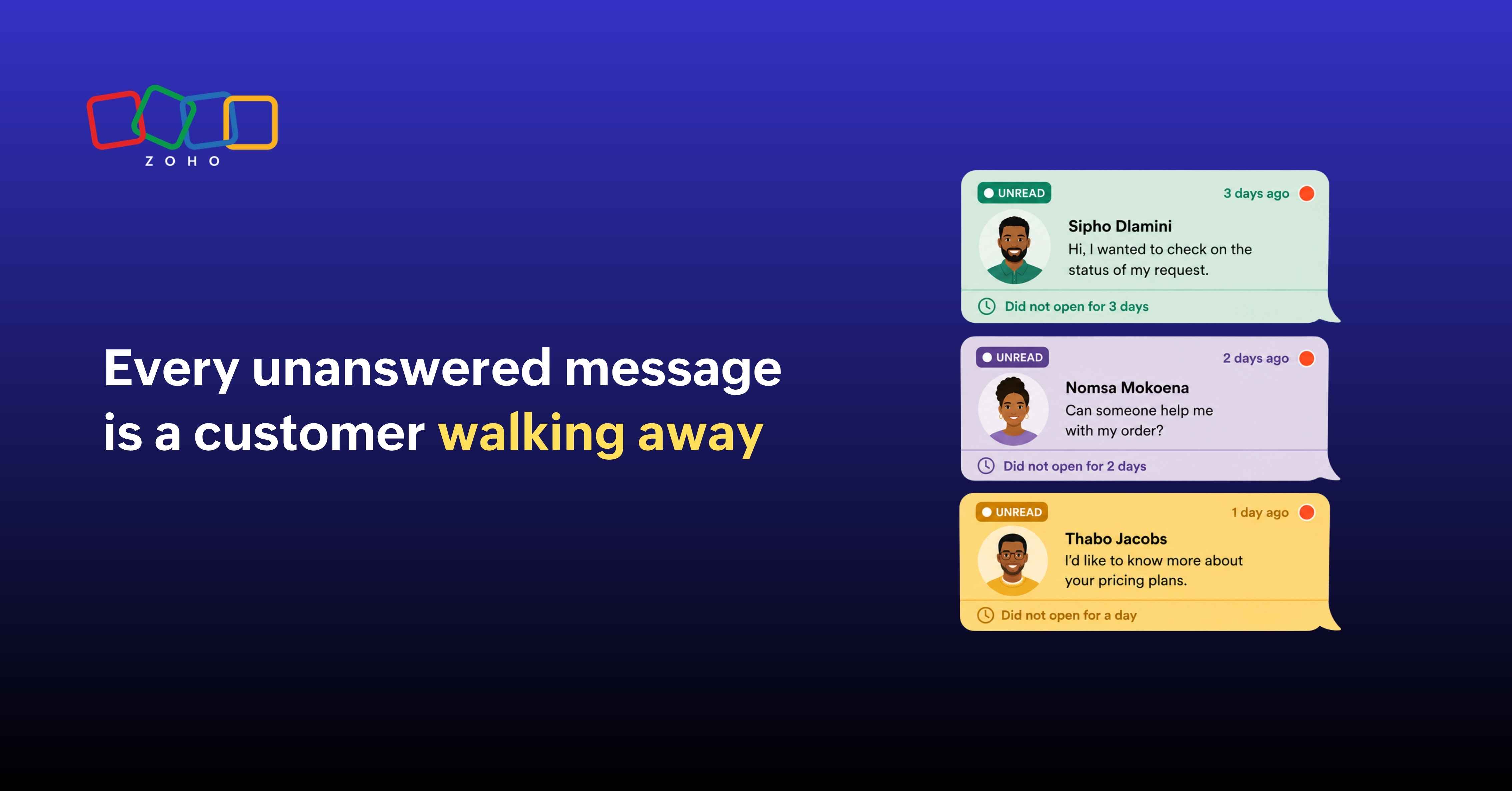
A plumbing business in Durban gets a WhatsApp enquiry at 10 AM on a Tuesday. The owner sees it at lunch and replies at 3 PM. By then, the customer has already booked someone else. This happens hundreds of thousands of times a day across South African small businesses, and most owners never know the sale was theirs to lose.
South Africa has roughly 3 million small and micro enterprises, employing around 13.4 million people. These businesses are the actual engine of the economy, but five out of seven failing within the first year. While access to finance gets most of the attention, the quieter problem is this: customers leave before the business even realises it has a service problem.
The response window is smaller than you think
Sixty percent of customers now define "immediate" as within ten minutes. That expectation doesn't adjust for the size of your team. A customer messaging a two-person operation in Soweto expects the same speed as someone messaging a call centre in Sandton. They may be forgiving once or twice, but the third time they send a WhatsApp and hear nothing for four hours, they're gone.
In South Africa, 94% of consumers say the experience a business provides matters as much as its products or services, according to Salesforce survey done in 2022. For an SME without a marketing budget, every customer interaction is the brand. A fast reply builds more trust than a billboard.
Every small moment is building something
Trust in small businesses doesn't arrive in a single moment; it accumulates. A customer sends a query and gets a response within an hour. They ask a follow-up and get a clear answer. They raise a problem and it gets resolved without being passed around. Each of these moments is small, but, together, they're the entire reason someone comes back.
The Edelman Trust Barometer found that 62% of South Africans trust businesses more than the government by a 40-point gap, the widest in the survey. But trust in "business" as a concept doesn't transfer automatically to your business. It has to be earned through consistent, specific interactions. For an SME with three staff members, that consistency is hard to maintain when the same person answering customer queries is also managing stock, chasing invoices, and dealing with suppliers.
This is where the process has to work harder than the people.
What load-shedding forced South African SMEs to learn
The load-shedding crisis forced small businesses to confront how fragile their customer service infrastructure was. When the power went out, so did the Wi-Fi, the point-of-sale system, and the ability to respond to customers. Businesses that had moved their customer records, communication, and scheduling to cloud-based tools kept operating from their phones. Businesses that hadn't went dark for four hours at a time, sometimes mid-conversation with a customer.
A Seacom survey found that 61% of businesses adopted cloud services specifically for business continuity during load-shedding. The SMEs that adapted fastest were the ones that recognised the cost of going silent.
"Great customer service isn't defined by the size of your team. It's built on consistent responsiveness. The businesses that earn lasting trust are the ones that make every customer feel heard, even when resources are limited."
- Andrew Bourne, Regional Head Zoho Southern Africa
Structure beats good intentions every time
You don't need a customer service department. You need structure.
Start with an auto-acknowledgement on WhatsApp Business and via email so that every enquiry gets an immediate response confirming it was received. This buys time without making the customer feel ignored. From there, set up a shared inbox: if one person is unavailable, someone else can pick up the conversation without the customer having to start again. Agree on a response-time target with your team, even something as simple as "within two hours." A stated standard creates accountability that good intentions alone don't. Lastly, keep a record of customer interactions somewhere that isn't a personal phone. When a conversation lives only in one person's WhatsApp, the business has no memory.
None of these cost much to set up. They just require deciding that missing a customer message is never acceptable.
Struggling to keep up with customer enquiries?
Zoho Desk gives small teams a shared inbox, automated ticket tracking, and response-time reporting so no customer message gets lost. It's built for small teams where one missed message is one missed customer.
FAQs
Why do South African SMEs lose customers even when their product is good?
Because 89% of South African consumers say the experience a business provides is as important as the product itself. A slow reply, an unanswered WhatsApp message, or a dropped follow-up signals unreliability. Customers rarely complain. They just stop calling.
What response time do customers expect from a small business?
Sixty percent of customers globally define "immediate" as within ten minutes. In practice, most South African SMEs should aim for under two hours for non-urgent enquiries and under thirty minutes for WhatsApp messages. Setting a team-wide target and communicating it to customers builds trust, even if the response is just an acknowledgement.
How did load-shedding change customer service for South African SMEs?
It exposed how dependent many businesses were on infrastructure that could go offline at any time. SMEs that moved to cloud-based tools kept responding to customers during outages by working from mobile. A 2023 Seacom survey found that 61% of businesses adopted cloud services specifically for business continuity during load-shedding.
How does Zoho Desk help small teams manage customer service?
Zoho Desk provides a shared inbox where every customer enquiry becomes a trackable ticket. Team members can see the full conversation history, assign queries, and set response-time targets. For a small team, this means no messages fall through the cracks when someone is out or busy.
Is Zoho Desk affordable for a South African SME?
Zoho Desk has a free tier for up to three agents, which covers most micro and small businesses. Paid plans scale as the team grows.
Does Zoho Desk work on mobile for teams that aren't always at a desk?
Yes. Zoho Desk has a full mobile app that lets team members view, respond to, and manage tickets from their phones. For South African SMEs where staff are frequently on the move or working through load-shedding, mobile access means customer service doesn't stop when the office does.