
What builds digital trust for customers in Saudi Arabia
For CX, marketing, and retail professionals operating in or entering the Kingdom
Saudi Arabia’s digital economy is moving fast. eCommerce revenue is projected to exceed US$ 20.01 Billion in 2027, quick commerce is growing at 23.54% annually, and mobile penetration is among the highest in the world. The customers driving this growth are young, digitally fluent, and harder to fool than some brands assume. They know what a polished online experience looks like, and they notice when something feels off.
Trust is the conversion lever. A customer who doesn’t trust your platform won’t complete a purchase, won’t share their data, and won’t return. In a market where word-of-mouth travels fast across tightly connected social networks, a single friction point can ripple well beyond the individual transaction. We've compiled six factors that actually determine whether Saudi customers trust you.
1. The Arabic UX test
Language is the first signal. Saudi consumers expect interfaces built in Arabic from the ground up, and they can tell the difference between that and an English platform with an Arabic skin. Broken right-to-left (RTL) layouts, inconsistent bilingual copy, or form fields that misbehave in Arabic erode confidence immediately, often before a customer has read a single word of your content.
The language audit needs to go further than most teams run it. The post-purchase confirmation email, the returns policy, the SMS that goes out when an order ships—each of these is a moment where the brand either sounds like it belongs here or sounds like a visitor. Every touchpoint that speaks in a foreign voice is a moment of doubt introduced into the purchase journey.
For retail, this has a direct commercial effect. Checkout abandonment data consistently shows that users drop off when the experience stops feeling native.
2. Payment options signal market fluency
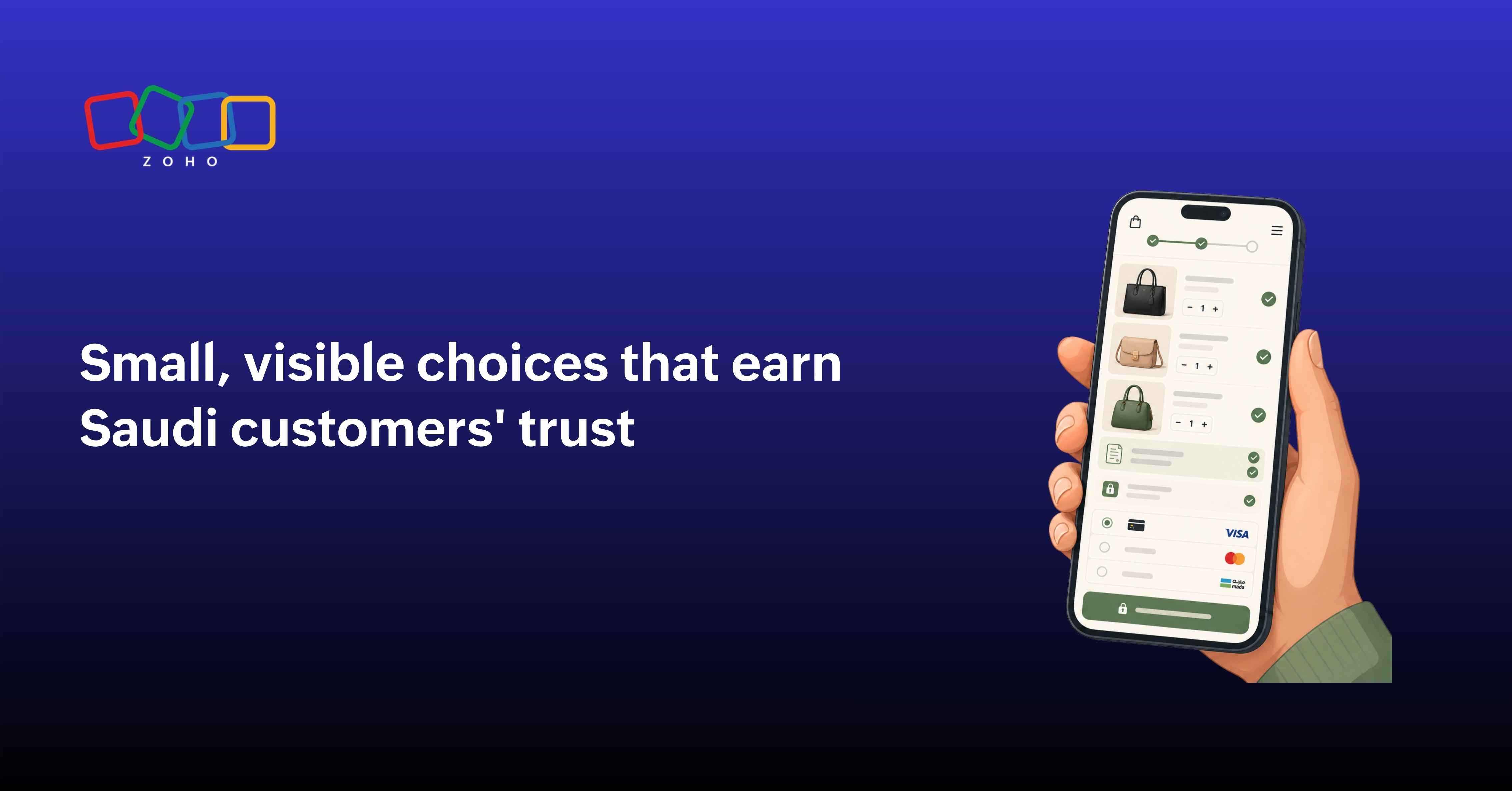
Saudi payment preferences are well-established and function as a readability test. Apple Pay and other global digital wallets lead at 36%, followed by Mada (the Kingdom’s domestic debit network) at 22%, credit cards at 18%, and STC Pay at 12%. Deferred payment services—like Tamara and Tabby—are growing fast, particularly in fashion, electronics, and lifestyle retail. Displaying Mada and STC Pay at checkout signals awareness of how younger Saudi customers prefer to manage larger purchases.
Cash on delivery is declining but remains meaningful in certain demographics and product categories. For first-time buyers, offering COD can reduce perceived risk enough to convert a hesitant customer, with the expectation that repeat purchases migrate to digital payment over time.
3. Social proof and the Saudi trust network
Saudi Arabia has one of the highest social media penetration rates in the world. Snapchat, TikTok, Instagram, and X are core to how consumers discover, evaluate, and decide. Influencer marketing is well-established here, but the audience has matured. Polished sponsored content no longer converts as reliably as authentic peer recommendations, and consumers are good at distinguishing between the two.
For retail, user-generated content, verified reviews, and visible customer ratings carry real weight. A product page with no reviews or with reviews that feel templated introduces doubt. Real Arabic-language reviews from verified buyers do something static marketing copy cannot: they make the purchase feel safe.
Family networks matter here in a way that’s easy to overlook when designing for individual conversion. Saudi purchase decisions, especially significant ones, are often discussed within family groups. Trust earned by one household member transfers to others. A customer who had a good first experience doesn’t just come back; they bring people. Building for repeat and multi-person purchasing journeys, rather than optimising only for individual first-time conversion, changes what you prioritise in the experience and the post-purchase flow.
4. Delivery: Predictability over speed
Same-day and next-day delivery is increasingly the benchmark in Riyadh and Jeddah, but the trust driver is predictability.
A customer who gets an accurate delivery estimate, real-time tracking, and proactive notifications when something changes has a fundamentally different experience than one who is told their order will arrive within three to five business days. The first creates confidence. The second creates a customer who opens support tickets and doesn’t come back.
Returns policies are underinvested in across most of the market. A generous, clearly worded, and operationally frictionless returns process reduces perceived purchase risk. In fashion and electronics, where customers can’t inspect products before buying, it’s often the deciding factor between an add-to-cart and a back button.
5. Credentials that communicate legitimacy
Saudi consumers are appropriately sceptical of unfamiliar digital brands. The basics matter more than brands expect: a Commercial Registration (CR) number, a local contact address or phone number, accepted payment logos at checkout, SSL certification, and category-relevant certifications (Halal for food and cosmetics, SFDA for health products).
For brands entering KSA, local partnerships with known logistics providers or payment processors function as credibility proxies. The name recognition of those partners transfers.
6. Customer service in Arabic on WhatsApp
Saudi customers expect to reach a brand in Arabic via WhatsApp, live chat, or phone. A customer service function that operates only in English or through a non-responsive email-only channel creates a barrier to trust recovery that’s hard to overcome.
WhatsApp is the dominant messaging platform in the Kingdom, and it's increasingly expected as a service channel. Brands offering responsive Arabic-language WhatsApp support with defined, short response windows consistently outperform those that don’t on post-purchase satisfaction. The brands doing this well are treating it as the default because Saudi customers already do.
The brands that earn trust in Saudi Arabia are the ones that make small, concrete choices: build Arabic UX properly, put Mada in the checkout, answer the WhatsApp message. None of it is technically complicated. All of it is visible to the customer.
— Saran Babu Paramasivam, Regional Director, Zoho MEA
In a market growing as fast as this one, the brands that haven’t done it yet are being outrun by the ones that have.
The Saudi digital trust checklist
Use this to audit your current position or plan a market entry.
Language and localization
- A full Arabic-language customer journey is available, including checkout, error states, and post-purchase communications.
- RTL layout renders correctly across all pages and devices.
- Prices are displayed in Saudi Riyals (SAR) with no currency ambiguity.
- No machine-translated copy is used in customer-facing content; Arabic is reviewed by a native speaker.
- SMS, email, and push notifications are available in Arabic.
Payment and checkout
- Mada is accepted and displayed prominently at checkout.
- Apple Pay and/or STC Pay are supported.
- BNPL options are available (Tamara or Tabby), especially relevant for fashion, electronics, and home categories.
- Checkout is optimised for mobile (minimal form fields, fast load, and large tap targets).
- Payment security logos are visible at checkout (e.g., Verified by Vis or Mastercard SecureCode).
Data privacy and compliance
- Consent mechanisms are in place at all data collection points.
- Your privacy policy is available in Arabic and written in plain language.
- There's a clear explanation of what data is collected and why presented at the point of collection.
- The data deletion and access request process is operational and accessible.
- The breach notification process defined and tested.
Social proof and reviews
- Product and service reviews are enabled and prominently displayed.
- Arabic-language customer reviews are surfaced and not buried.
- Influencer partnerships are aligned with authentic, category-relevant creators.
- Delivery and fulfilment
- Accurate delivery time estimates are displayed before purchase confirmation.
- Real-time order tracking is available post-purchase.
- Proactive communication is in place for delays or exceptions.
- The returns policy is prominently displayed, clearly worded, and operationally frictionless.
- The delivery experience has been reviewed for Ramadan, Eid, and peak season capacity.
Credentials and legitimacy
- Your Commercial Registration (CR) number is visible on your website.
- Your local contact details (phone, WhatsApp, and address) are clearly displayed.
- Your SSL certificate is active and visible.
- The relevant category certifications are displayed (Halal, SFDA, etc.).
- The brand is listed or verified on major local platforms as applicable (Google Maps, Hungerstation, etc.).
Customer service
- Arabic-language customer support is available via at least two channels.
- Your WhatsApp support channel is active with defined response time standards.
- Your support hours cover KSA time zone (AST, GMT+3).
- The escalation process for complaints is defined and tested.
- The post-purchase satisfaction measurements are in place (NPS or CSAT).