
- HOME
- Know Your Tech
- Vendor management system: What it is and how it works
Vendor management system: What it is and how it works
- Last Updated : March 24, 2026
- 1.1K Views
- 11 Min Read
Managing vendor relationships gets complex as your supplier base grows. Contracts expire without warning because tracking happens manually. Vendor data stays in different systems across departments, making it difficult to see actual spending or performance. When procurement, finance, and operations each maintain their own records, decisions get made with incomplete information.
A vendor management system centralizes supplier data and creates automated workflows based on rules you define. According to recent data, the global vendor risk management market is projected to reach $24.95 billion by 2030, highlighting how businesses increasingly prioritize organized vendor management to reduce risks and improve efficiency.
Highlights
- A vendor management system centralizes data in one platform, replacing spreadsheets and disconnected tools.
- Procurement VMS platforms differ from contingent workforce management systems, focusing on supplier lifecycle management rather than temporary staffing.
- Key features include automated contract tracking, vendor performance monitoring, compliance management, and centralized communicationtools.
- Businesses using vendor management systems gain better spend visibility, reduce contract risks, and improve supplier relationships through data-driven decisions.
- A VMS works by consolidating vendor information, automating workflows like approvals and renewals, and providing real-time performance analytics.
This blog post breaks down what a vendor management system is in detail including how it works, and the key features and benefits. You’ll also get implementation steps and tips to choose the right system for your procurement needs.
What is a vendor management system?
A vendor management system is a centralized software platform that manages supplier and vendor relationships throughout the procurement lifecycle. It handles vendor selection, onboarding, contract management, performance tracking, and compliance monitoring in one place.
Unlike contingent workforce management systems that handle temporary workers and staffing agencies, procurement VMS platforms focus on supplier relationships for goods and services. The two serve primarily different purposes with distinct features built for different business operations.
For instance, a manufacturing company can use a VMS to manage 200+ component suppliers. The system tracks contracts, monitors delivery performance, and automates reorder workflows. When a supplier's contract nears expiration, the VMS alerts procurement, provides renewal templates, and tracks renewal status and approval progress without manual coordination.
Why businesses need a vendor management system
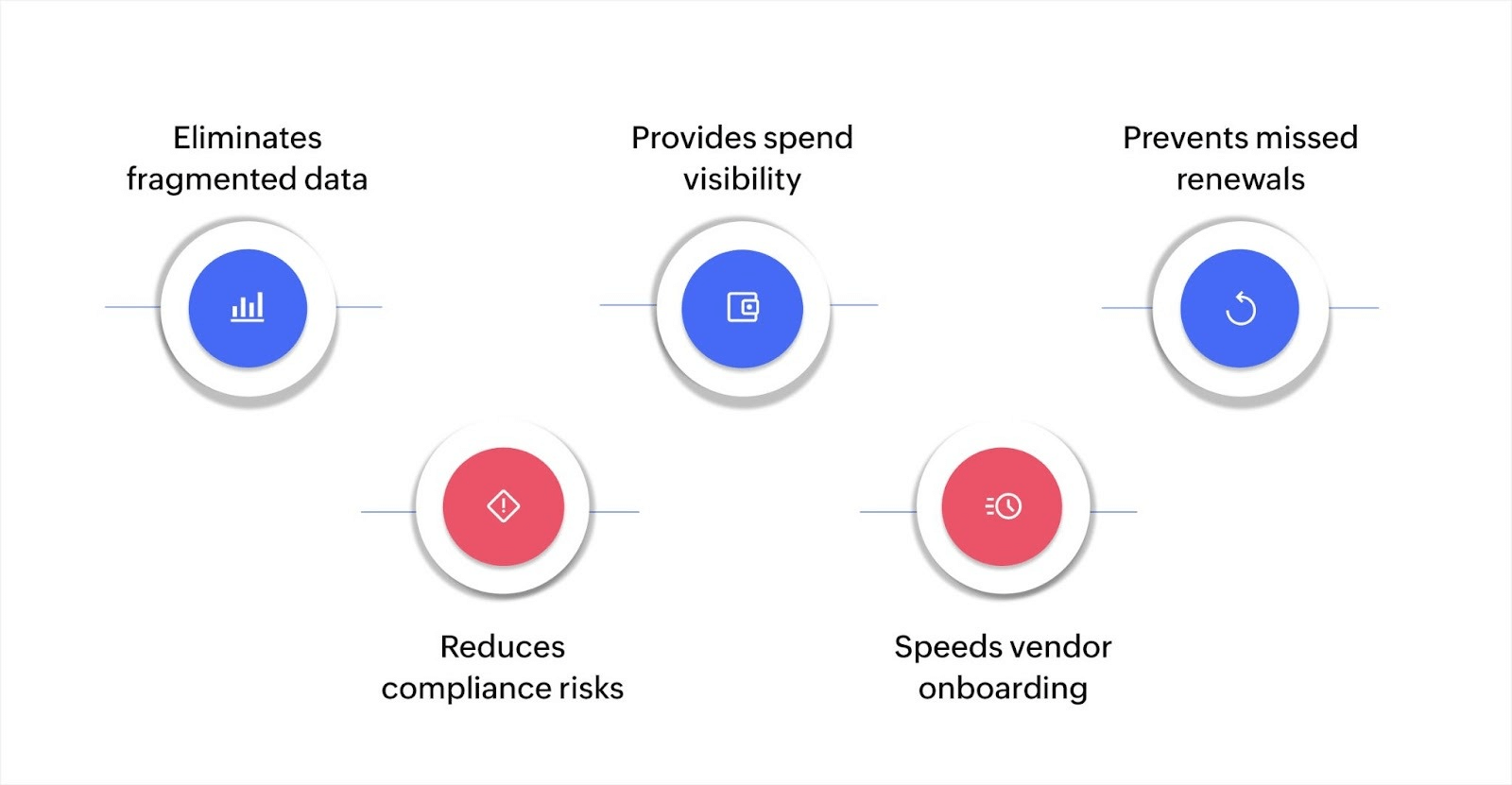
Managing vendors without a central system creates problems across your entire procurement process. Teams waste time searching for information that should be immediately available. Contract dates get missed because no one tracks them consistently. Vendor data exists in multiple places, and no version matches completely.
Here's why centralized vendor management matters:
- Eliminates fragmented data - A VMS creates one place for all vendor information. Everyone accesses the same accurate data instead of searching through emails and spreadsheets.
- Provides spend visibility - You can quickly identify top-spending vendors and find consolidation opportunities. Better visibility leads to informed negotiations and cost savings.
- Prevents missed renewals - Automated tracking alerts you before contracts expire. You can negotiate renewals proactively instead of accepting unfavorable auto-renewal terms.
- Reduces compliance risks - Centralized monitoring flags expired certifications and insurance requirements. You stay audit-ready and avoid working with non-compliant vendors.
- Speeds vendor onboarding -Standardized workflows reduce approval times and manual coordination. New suppliers get operational faster with less back-and-forth across departments.
A vendor management system addresses these issues through centralized data and automated workflows. As your supplier relationships grow more complex, the system scales without requiring proportional increases in administrative work.
How a vendor management system works
A VMS acts as a central hub where all vendor information gets organized when configured as your system of records. When someone needs supplier data, they access the same system with current information.
Here's how the system operates:
- Connects data across teams - The system links information from procurement, finance, operations, and compliance so everyone sees the complete vendor relationship.
- Automates routine tasks - The VMS handles repetitive work like routing approvals, sending renewal reminders, and updating performance scorecards based on rules you set.
- Triggers actions based on events - When a contract nears expiration, the system alerts the right people and provides the templates and information they need to act.
- Provides real-time access - Team members pull current vendor information whenever needed with reports and dashboards updating automatically as new data comes in.
- Maintains complete history - The system tracks all changes, communications, and decisions related to each vendor, creating clear accountability and audit trails.
Automation handles coordination work while your team focuses on strategic decisions like vendor negotiations and relationship building. Knowing these core capabilities helps you evaluate which specific features matter most for your procurement needs.
Key features of a vendor management system
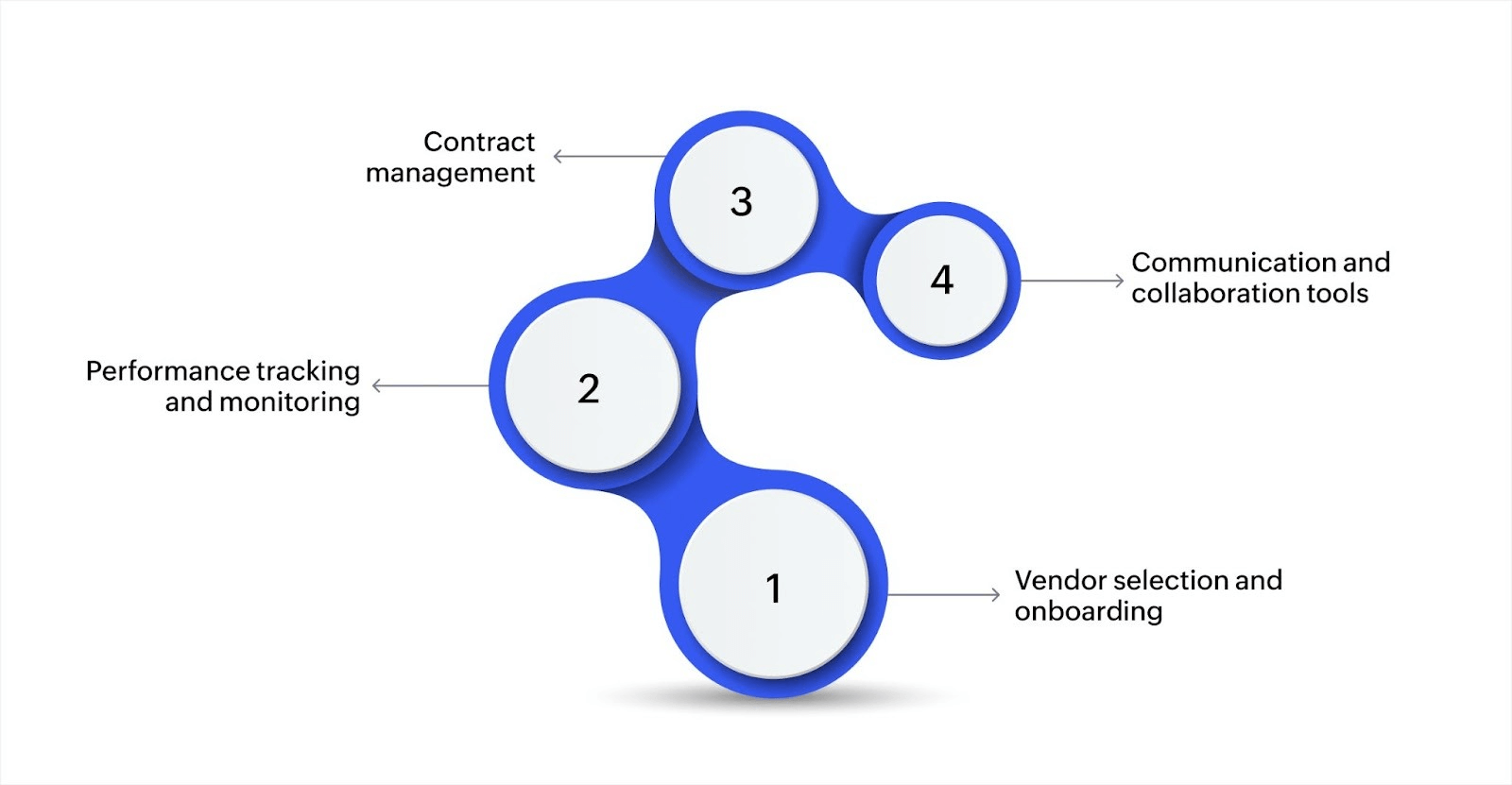
A VMS includes several features that simplify vendor management and improve business operations. Here are the key capabilities.
Vendor selection and onboarding
A VMS helps you assess potential vendors through consistent criteria like location, category, and performance data. This ensures you select the best fit for your needs. Once a vendor is chosen, the system simplifies the onboarding process, efficiently handling all necessary compliance checks and documentation.
Performance tracking and monitoring
With real-time performance tracking, a VMS helps monitor whether vendors meet agreed-upon service levels. By monitoring key performance indicators (KPIs), the system helps identify potential issues early, enabling you to take corrective action before they impact operations. This keeps your supply chain running smoothly and prevents disruptions.
Contract management
A VMS simplifies contract management by storing agreements digitally and tracking important milestones like renewals and expirations. The system helps ensure alignment with contract terms, provides tools for audits, and reduces administrative and compliance risks associated with manual contract handling.
Communication and collaboration tools
Clear communication is key to maintaining strong vendor relationships. A VMS offers built-in tools for easy communication, document sharing, and tracking of all interactions. These features ensure both you and your vendors stay aligned, making collaboration more efficient.
In addition to these key features, a VMS also offers several significant benefits that can help improve the overall efficiency of your business operations.
Benefits of a vendor management system
A VMS offers many benefits by improving operational efficiency, boosting vendor performance, and providing better control over procurement costs. It simplifies workflows, reduces manual tasks, and supports a more strategic, data-driven approach to managing suppliers.
Cost savings and efficiency
Automating repetitive tasks like invoice processing and contract renewal reduces administrative costs. The system allows for quicker vendor selection and performance monitoring, reducing operational costs. By working with the right vendors, you can avoid unnecessary expenses caused by underperformance or delays.
Risk reduction and compliance management
A VMS simplifies the process of managing vendor risks. It supports comprehensive risk assessments and continuous compliance monitoring. By tracking certifications, regulations, and due diligence, you reduce the risk of vendor-related disruptions and ensure adherence to legal and industry standards.
Improved vendor relationships
A VMS improves transparency and fosters better communication between your team and vendors. Setting clear expectations and addressing issues proactively builds stronger, more cooperative partnerships. Over time, this results in improved collaboration and long-term relationships.
Simplified processes and automation
A VMS reduces manual effort and errors by automating vendor onboarding, contract management, and performance tracking. It also simplifies workflows, allowing your team to focus on more strategic activities while ensuring vendor-related tasks are handled smoothly and efficiently.
However, despite the many benefits, businesses face some common challenges when managing vendors.
Operational vendor management challenges (before using a VMS)
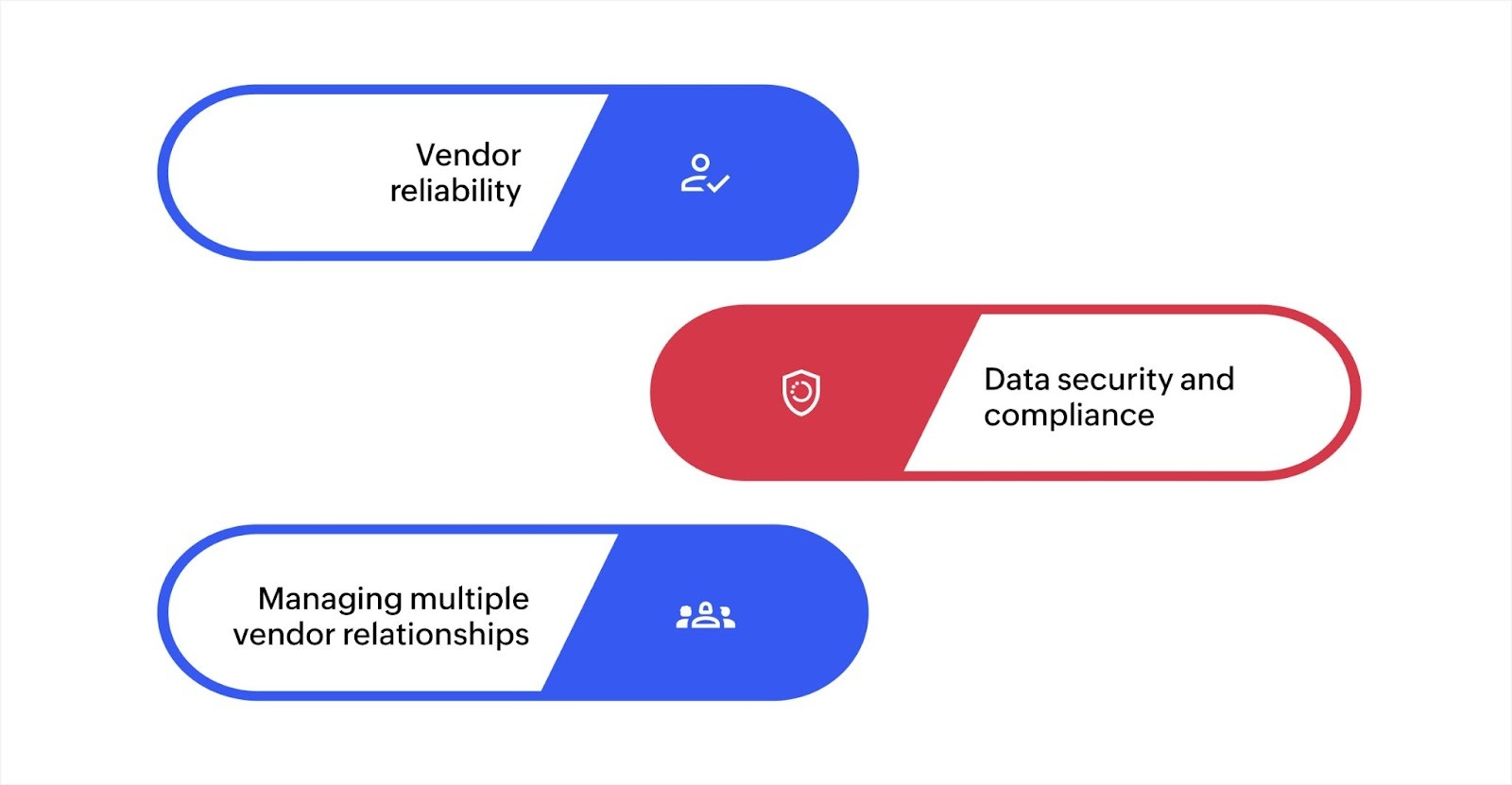
Managing vendors effectively comes with its own set of challenges, including balancing expectations, monitoring performance, and ensuring compliance across various suppliers. These challenges only become more complex as your business expands and diversifies its vendor base.
Vendor reliability
Even after carefully selecting vendors, there can be instances where they fail to meet expectations, whether in terms of quality, service, or delivery timelines.
With a VMS, you can easily track performance metrics, identify problem areas, and take corrective action quickly. This proactive approach helps ensure that reliability issues don’t disrupt your business.
Data security and compliance
Managing data security and ensuring compliance with regulations across multiple vendors can be a daunting task. With a growing vendor base, staying on top of these factors becomes increasingly challenging.
A VMS provides tools to help protect sensitive vendor data and track compliance requirements. It maintains audit trails proving due diligence. You can generate compliance reports instantly rather than spending weeks gathering documentation for audits.
Managing multiple vendor relationships
As your business grows, so does the number of vendors you manage, and handling these relationships can become overwhelming without a centralized system.
A VMS simplifies vendor relationship management by providing a single platform to track all interactions, performance data, and contract details. This centralization streamlines processes and reduces the complexity of managing multiple vendors.
By addressing these challenges, a VMS simplifies operations, reduces risks, and improves collaboration with your suppliers. This results in more efficient vendor relationships and better business outcomes.
The vendor management system implementation process
Implementing a VMS involves aligning your business goals with the system's capabilities, integrating vendor data, and improving workflows. The key steps include choosing the right system, setting clear performance metrics, and ensuring a smooth implementation process.
1. Align business goals with technical requirements
The first step in a VMS implementation is aligning business goals with technical needs. Key stakeholders from procurement, IT, legal, and finance must define both the business outcomes (reduced costs, improved vendor performance, etc.) and the system requirements.
Here's a structured approach to this step:
- Determine integration points with existing systems, like ERP and CRM.
- Define scalability needs based on future business growth.
- Prioritize key functional requirements, like automation of workflows, reporting, and data security.
This alignment will help you select the right VMS and configure it to meet your business' specific needs.
2. Select the right vendor management system
Selecting the right VMS is crucial for ensuring that both functional and technical requirements are met. It’s important to consider flexibility, scalability, integration capabilities, and automation features.
Here's an easy checklist that will help you evaluate which platform fits your business.
| Evaluation criteria | Key question to ask | Your answer |
| Flexibility | Does it adapt to your workflows and vendor categories? | Yes/No |
| Integration | Does it connect with your ERP, accounting, and existing tools? | Yes/No |
| Scalability | Can it handle 10x growth without performance issues? | Yes/No |
| Ease of use | Can teams use it with minimal training? | Yes/No |
| Automation | Does it automate approvals, renewals, and tracking? | Yes/No |
| Reporting | Does it provide the spend analysis and performance insights you need? | Yes/No |
| Security | Does it meet your industry compliance requirements? | Yes/No |
| Support | Does the vendor offer implementation help and ongoing assistance? | Yes/No |
Choosing the right system sets the foundation for success. For example, MachineMaze, a manufacturing solutions provider, built a custom VMS with Zoho Creator, an AI-powered low-code application development platform, to manage over 300 vendors, automating RFQs, centralizing onboarding, and enabling real-time performance tracking.
3. Build a vendor management team and assign technical roles
A dedicated team is important for managing the VMS implementation and ensuring its alignment with business goals. This team should have both business and technical expertise to help with the system's design, implementation, and operation.
Key roles to assign
- Project manager: Oversees the implementation, timeline, and resource allocation
- IT architect: Ensures smooth system integration with other enterprise tools
- Security officer: Focuses on ensuring compliance with data protection regulations like GDPR
- Vendor management lead: Manages vendor selection, relationship building, and performance tracking
Having a team with diverse expertise ensures the VMS is properly implemented, integrated, and maintained.
4. Consolidate vendor data in a structured database
The VMS should consolidate all vendor-related data in a secure, structured database. This will allow for easy vendor comparison, effective contract management, and better performance tracking.
Technical considerations
- Database structure: Sort vendors by type, performance metrics, contract terms, and financials.
- Integration with enterprise systems: Ensure data integration between the VMS and ERP, CRM, and other internal systems.
- Real-time updates: Use APIs or middleware for real-time data integration, ensuring up-to-date information is always available.
An organized database ensures all vendor data is accurate, accessible, and usable for decision-making.
5. Implement vendor selection criteria and evaluate vendors
Once the VMS is operational, define clear vendor selection criteria and set up automated processes to assess potential vendors based on these criteria.
Key features to use
- Scoring models: Set up scoring algorithms to rank vendors based on cost, service quality, and reliability.
- Performance dashboards: Create dashboards that visualize vendor performance metrics, such as delivery timelines and quality ratings.
- Analytics tools: Use data analytics to evaluate vendor performance over time, including predictive analytics for future assessments.
Automated vendor evaluation ensures consistency, transparency, and data-driven decisions.
6. Develop and negotiate contracts within the VMS
Contract management is a central feature of most VMS platforms. The system should simplify the process of contract creation, negotiation, and execution, ensuring compliance and reducing risks.
- Contract templates: Use customizable contract templates to speed up the negotiation process while maintaining consistency and compliance.
- Digital signatures: Integrate digital signatures for faster contract approvals and legal security.
- Alerting mechanisms: Set up automated alerts for contract expiration, renewal dates, and key milestones.
Contract automation reduces manual work, ensuring legal and compliance requirements are met and contracts are efficiently managed.
7. Ongoing vendor performance and compliance monitoring
A VMS plays a key role in not just tracking vendor performance but also ensuring vendors adhere to contractual obligations and regulatory requirements.
Key features to use
- Compliance checks: Automate regular compliance checks to ensure vendors meet required standards, certifications, and industry regulations.
- Real-time monitoring: Use real-time data to track vendor adherence to agreed terms, such as service level agreements and delivery schedules.
- Automated alerts: Set up alerts to notify you if vendors fall short of compliance expectations, enabling swift intervention.
This continuous monitoring ensures vendors remain compliant and meet performance standards, keeping your operations smooth and reducing risk exposure.
Common implementation challenges and solutions
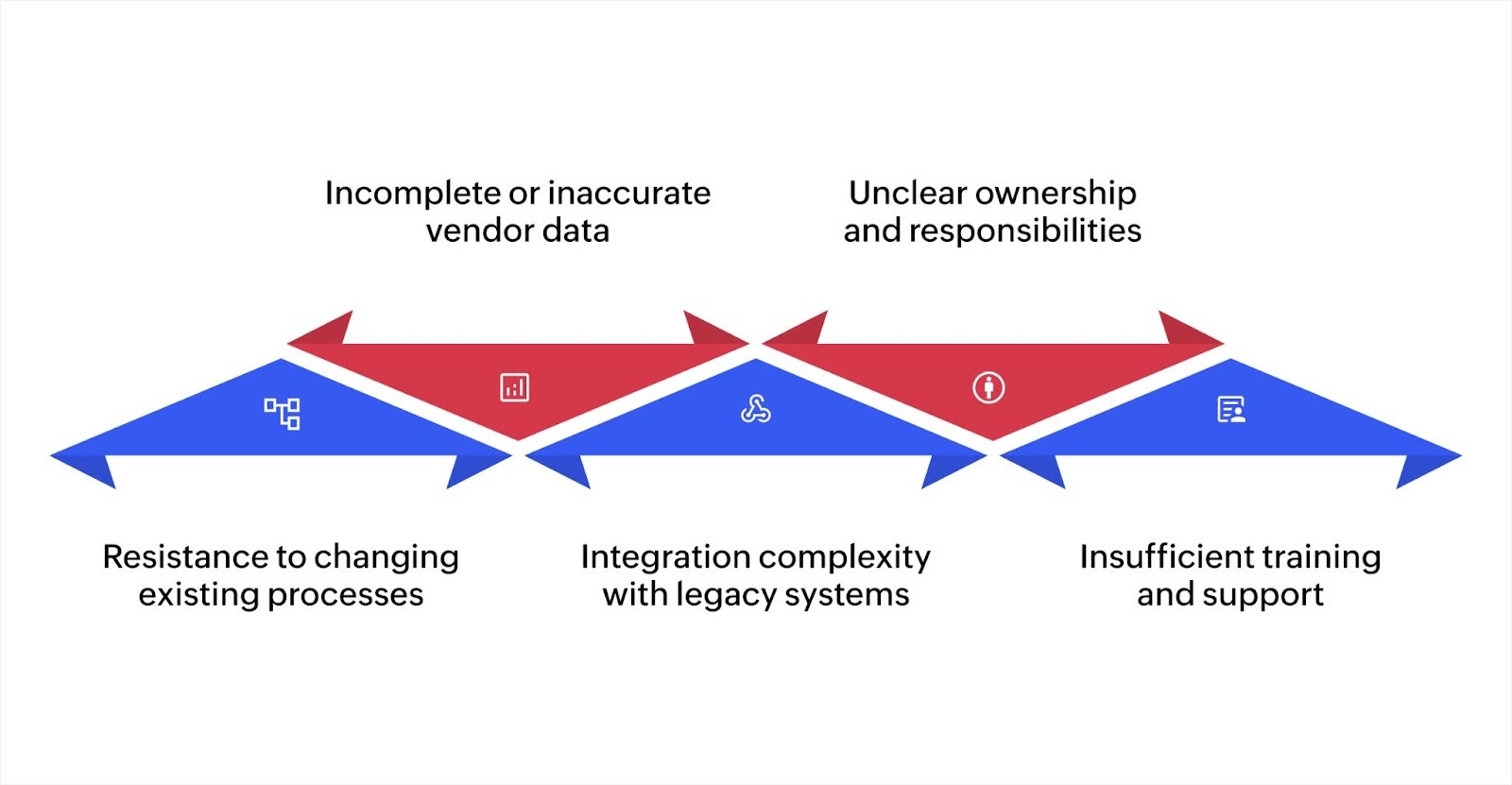
Even with good planning, VMS implementations face predictable obstacles. Knowing these challenges helps you prepare and address issues quickly when they arise.
Here's what to watch for and how to handle it.
- Resistance to changing existing processes: Teams comfortable with spreadsheets and email resist learning new systems. Show specific pain points the VMS solves for each department rather than just requiring adoption.
- Incomplete or inaccurate vendor data: Migrating poor-quality data into a new system just moves problems rather than solving them. Invest time in data cleanup before migration to build user confidence from day one.
- Integration complexity with legacy systems: Older ERP or accounting systems might not have modern integration options. Evaluate connection platforms that link disparate systems or prioritize automating workflows within the VMS.
- Unclear ownership and responsibilities: Without defined roles, vendor information doesn't get maintained, and the system becomes an unused database. Assign specific owners for vendor categories with clear responsibility matrices.
- Insufficient training and support: One-time training sessions don't stick when users encounter real scenarios weeks later. Provide role-based documentation, quick reference guides, and internal champions who help colleagues use the system effectively.
Addressing these challenges proactively reduces implementation time and increases adoption rates. The right platform makes overcoming these obstacles easier through built-in flexibility and support.
Create a custom vendor management system that fits your business needs
Effective vendor management is crucial for your business’ success. Without automation, you risk missed deadlines, errors, and inefficiencies that hinder growth. Simplifying processes can improve communication, reduce errors, and help you make better decisions.
An AI-powered low-code platform like Zoho Creator lets you build a custom vendor management system without heavy coding. It automates workflows, integrates with your existing tools, and reduces IT dependency. With Zoho Creator, you can simplify operations and focus on making smarter decisions.
Start your 15-day free trial and create workflows that match your actual procurement processes.
FAQ
How can a VMS help reduce vendor-related risks?
A VMS helps mitigate vendor-related risks by offering real-time monitoring of vendor compliance, performance, and financial stability. It enables you to assess potential risks and take proactive measures to ensure long-term stability.
Can a VMS support multi-vendor management for global operations?
Yes, a VMS can handle multi-vendor management across different regions and currencies, allowing you to maintain consistency in vendor relationships and performance tracking, no matter where your vendors are located.
How does a VMS improve vendor collaboration beyond basic communication?
A VMS provides tools for document sharing, feedback collection, and performance reviews, creating a collaborative environment where both parties can align expectations, discuss issues, and improve their working relationship.
Can a VMS assist with vendor audits and regulatory compliance?
Yes, a VMS tracks certifications, compliance milestones, and audit trails, ensuring vendors meet regulatory requirements. It simplifies the audit process by keeping all vendor-related documents in one place, making it easier to verify compliance.
How do you measure VMS success after implementation?
Track metrics like time spent on vendor onboarding, missed contract renewals, approval cycle times, and vendor performance scores. Compare these before and after implementation to quantify improvements in procurement efficiency and risk reduction.
 Merlin
Merlin is our in-house digital workplace content specialist. She spends part of her days combining her passion for writing with marketing. The rest of her time is spent reading manga, battling friends in online games, and discovering new music.