
Spiritual capitalism: The interdependence of profit and people
"I think many people assume, wrongly, that a company exists simply to make money. While this is an important result of a company’s existence, we have to go deeper and find the real reasons for our being. As we investigate this, we inevitably come to the conclusion that a group of people get together and exist as an institution that we call a company so they are able to accomplish something collectively which they could not accomplish separately. They are able to do something worthwhile—they make a contribution to society (a phrase which sounds trite but is fundamental)."
— Dave Packard, co-founder of HP, addressing HP managers on March 8, 1960
In our previous post Beyond the Friedman doctrine: Rethinking who a business truly serves, we saw how Friedman's doctrine of shareholder primacy fosters a single-minded pursuit of maximizing profit among businesses, and why this is detrimental to a business focusing on the long term. We concluded that any business that seeks longevity must adopt a humanistic approach that puts people before profits.
That humanistic approach requires a fundamental rethinking of what capital is. Traditional business logic defines capital by what’s on the balance sheet, like cash or infrastructure. But it ignores the human and cultural infrastructure that actually makes those physical assets productive. A team's skill, a customer's trust, or a community's goodwill can't be seen on a balance sheet.
Since profit is the only metric that matters on a balance sheet, the human element is frequently sacrificed at its altar. Companies make employees chase relentless targets, nickel-and-dime customers for every cent, and take from communities without giving back—all in the name of pushing their profit margin up. This approach attempts to grow the business by depleting the very people and relationships that sustain it.
There's a critical need for businesses to redefine capital through a human lens—which is exactly what spiritual capitalism does.
What is spiritual capitalism?
Spiritual capitalism acknowledges that a company’s most vital asset is the people—employees, customers, community—and the collaborative spirit that enables them to "accomplish something collectively which they could not accomplish separately," in Packard's words. Here, "spiritual" refers to the intangibles—skill, trust, goodwill—that can't be captured on a balance sheet.
By embracing spiritual capitalism, organizations reject the Friedman doctrine and start seeing social responsibility as a prerequisite for long-term survival. For such organizations, profit isn't the ultimate end, but the sustainable result of a healthy, trusted, and purpose-driven ecosystem.
Shareholder primacy assumes business is a zero-sum game—for one stakeholder to gain, others must lose. Spiritual capitalism rejects this dichotomous view, as it operates on what Jim Collins terms "the genius of the AND". A company can be profitable AND people-centric. It can be growth-oriented AND socially responsible.
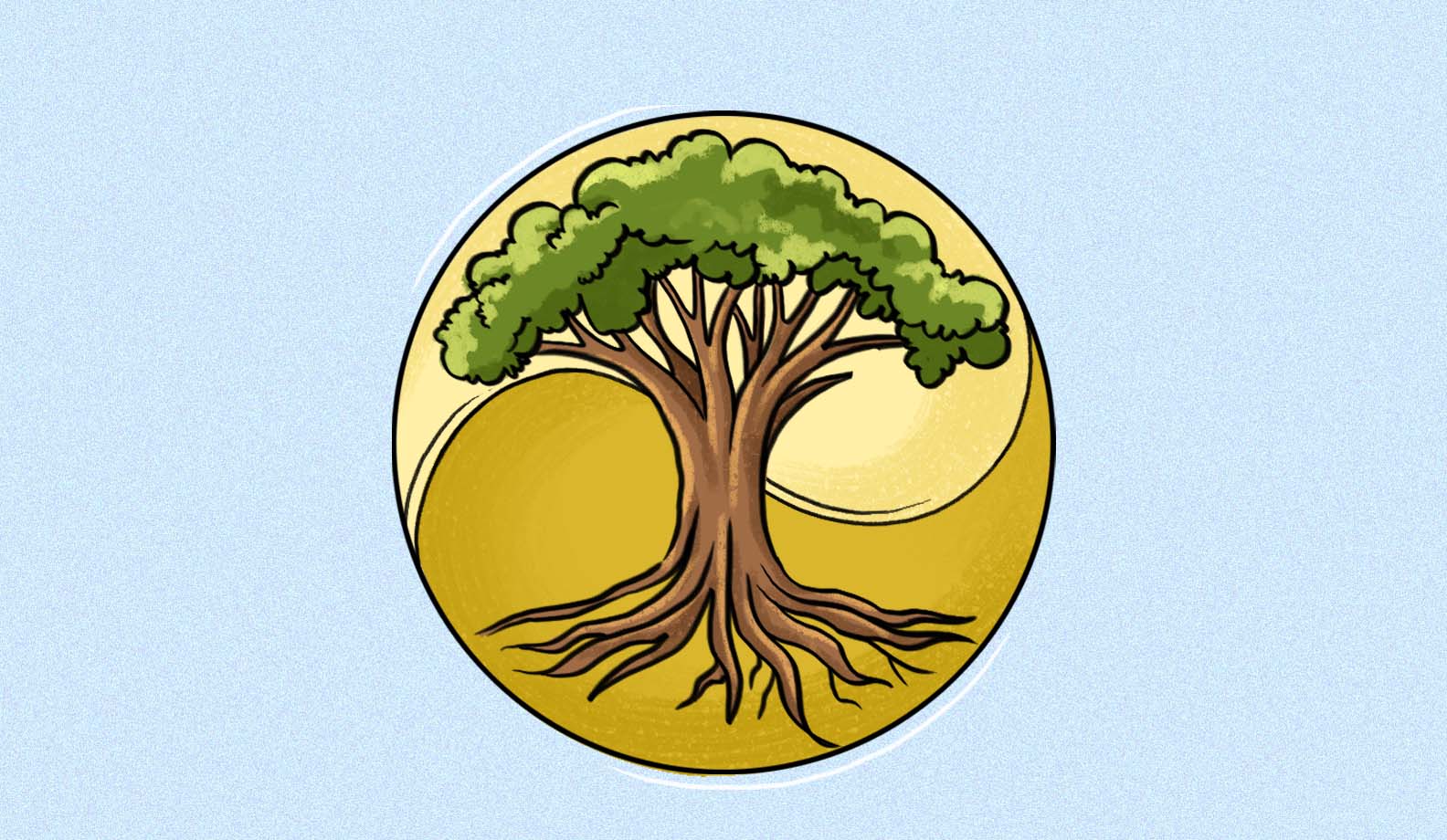
If the organization is seen as a fruit-bearing tree, spiritual capitalism sees the roots as the people and the fruit as profit. Nurturing the tree means watering the roots, and the fruit is the predictable consequence.
The business case for spiritual capitalism
At first glance, "spiritual capitalism" might sound like trading profit for a clean conscience or settling for less profit. But it's not. Spiritual capitalism is a deliberate business strategy that is based on the reality that businesses cannot achieve sustained profitability without a foundation of trust, purpose, and shared value among its stakeholders.
Alex Edmans, professor of finance at London Business School, argues in his book Grow the Pie: How Great Companies Deliver Both Purpose and Profit that businesses should invest in stakeholders because they can't be profitable in the long run without doing so. "When an enterprise is run with the primary purpose of creating value for society, it isn't sacrificing profits and redistributing a fixed pie. Instead, it expands the total value that it creates, benefiting investors as well as stakeholders. Indeed, this approach typically ends up more profitable in the long term than an attempt to maximize shareholder value" he concludes. "Creating social value is neither defensive nor simply 'worthy'—it's good business."
Edmans’ research demonstrates that prioritizing the foundational stakeholder—the employee—is a powerful driver of overall financial health. By analyzing the companies listed in the Fortune 100 Best Companies to Work For (an annual list that recognizes American organizations for employee satisfaction) over a 28-year period, he found that organizations with exceptional workplace cultures generated 2.3% to 3.8% higher stock returns per year than their peers.
Apart from being profitable, companies that take a holistic approach to their stakeholders will weather crises better than those who don't. In a study covering 1,673 firms in the U.S. during the 2008–09 global financial crisis, researchers Karl Lins, Henri Servaes, and Ane Tamayo found that those companies with higher social capital—the relationships a business has built with employees, customers, communities, and suppliers—had stock returns that were 4–7 percentage points higher than firms with low social capital. Because these companies had invested in those relationships before the crisis, customers stayed loyal, employees remained committed, and suppliers maintained relationships during the crisis.
These findings make one thing clear: Spiritual capitalism may be about ethics, but it's also about common sense. When a company treats stakeholders well, they stick around and trust the company. It's an approach optimized for resilience, recognizing that a business is only as stable as the trust it has built with its stakeholders.
To see what spiritual capitalism looks like in practice, let's take the example of Zoho.
How Zoho practices spiritual capitalism
Having been in business for three decades now, we at Zoho have been guided by spiritual capitalism since our inception. By choosing to stay focused on long-term profitability, we've proven that aligning a business with the well-being of its stakeholders is a viable and highly effective path to global scale.
It's our conviction that to remain in business for the long term, investment in our people and social responsibility are non-negotiables. Be it maintaining our own data centers spread across the world, investing in research and development to nurture innovation, or extensively using our own products for everyday work, we've always invested in building long-term knowledge capital internally. This way, our employees develop foundational expertise and deep institutional memory that gives them a sense of purpose at work and makes the company more agile and resilient.
Another way we ensure long-term investment in employees is through Zoho Schools of Learning, an in-house program that trains high school graduates, serving as an alternative to conventional college education. Roughly 15% of Zoho’s over 19,000-strong workforce consists of graduates from this program. While the program benefits those who couldn't afford college education, Zoho benefits by getting talent who grow with the company.
Like its employees, Zoho also prioritizes long-term association with its customers through a principle of shared growth. Sidestepping pricing tactics that can erode customer trust, we ensure a fair price for our software products that leaves money on the table for our customers. We've treated privacy as a foundational principle from the very start: no ads inside our products (not even in the free editions), no selling of user information to third parties, and no third-party trackers on any of our websites.
Unlike traditional corporate social responsibility, which often involves writing checks to external charities, Zoho’s approach to social responsibility is built on the belief that a company should be an active part of the community it inhabits.
Instead of demanding that job seekers relocate to urban hubs, we moved the work to the people by opening dozens of hub-and-spoke offices in rural areas around the world. This ensures talent stays rooted in their communities, families stay together, and the intellectual capital of the region fuels local growth rather than draining away to distant cities. In addition, Zoho also leads in sustainability initiatives like organic farming and setting up solar farms in villages close to our rural offices.
All of this is possible because Zoho has remained bootstrapped and profitable for 30 years. Not taking external capital means we're immune to shareholder primacy and answerable to our customers alone. With customer-centricity being the default operating mindset, every decision we make focuses on providing the best possible value for the customer.
While Milton Friedman posited that social responsibility and profit maximization are mutually exclusive, Zoho stands as a living proof of a business with a global footprint that can succeed both financially AND socially. As our lived experience illustrates, spiritual capitalism goes beyond creating a successful company through its emphasis on building institutions that recognize that a business thrives only when the people within and around it flourish.
"The idea is we have to bring the material welfare of the people and the psychological or the spiritual welfare together. These two have to go together. We cannot separate the two because we do not live by bread alone, nor can we just live by spiritual sustenance alone. We have to combine the two. For that, the holistic wellbeing in the material sense and in an inner psychological/spiritual sense—both are important. People have to be happy first. That's the notion of spiritual capitalism."


