
How Nigerian SMEs can scale operations without hiring aggressively
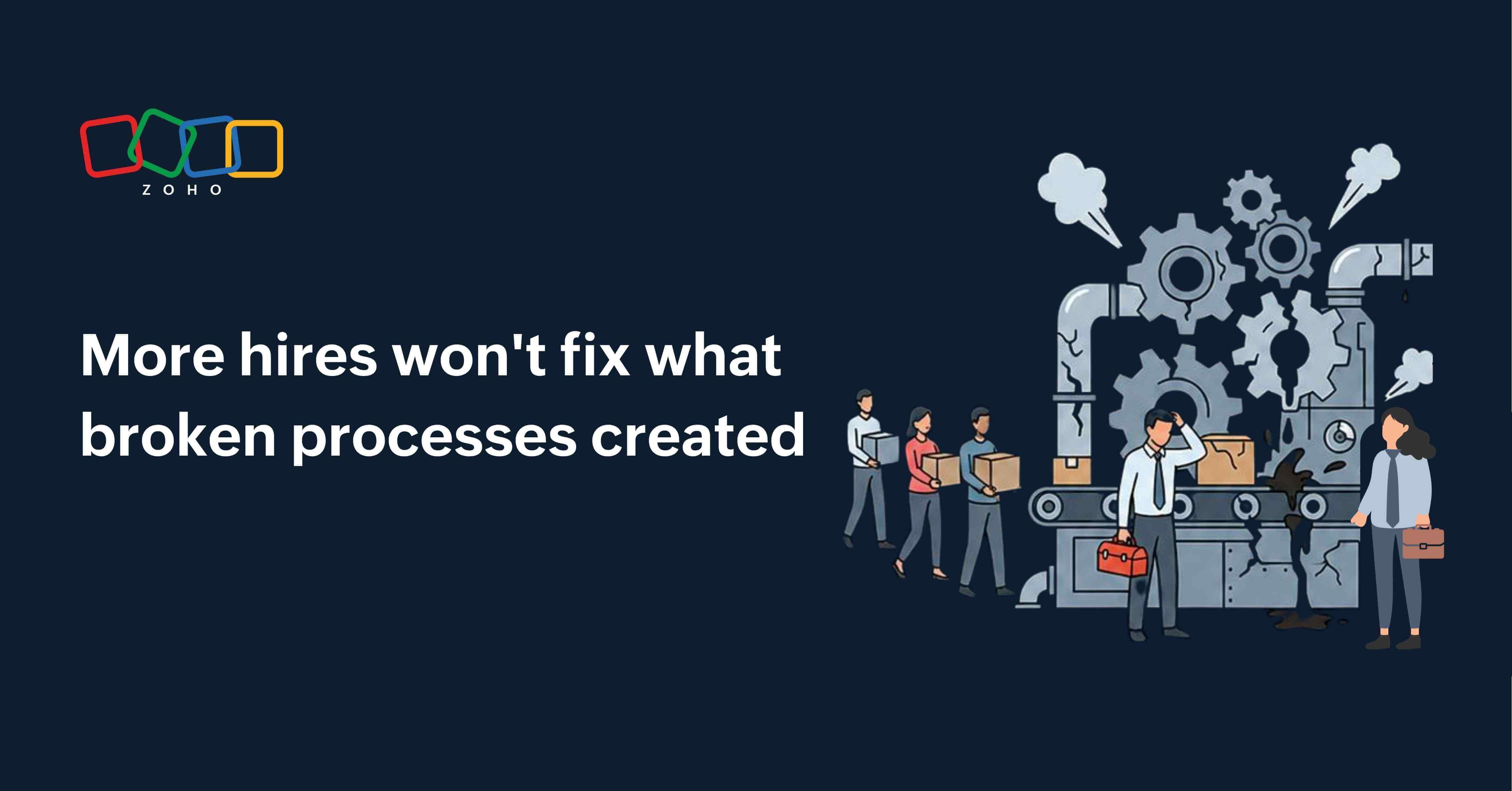
According to the NBS/SMEDAN MSME 2021 survey report, SMEs account for 96.9% of all businesses in Nigeria and provide over 80% of the nation's jobs. However, across this market of 40 million SMEs, hiring has become a challenge. Currency volatility in Nigeria has made it difficult for local firms to meet rising salary expectations while the "Japa" wave continues to pull skilled workers abroad. Compounding this, foreign companies are now hiring Nigerians directly for remote roles. A 2025 study on tech entrepreneurship in Southwest Nigeria revealed that 81.6% of Nigerian tech workers who resigned did so for better pay elsewhere. Ultimately, many SMEs stall because their operations remain overly dependent on specific people rather than scalable processes.
The hidden cost of every new hire
Hiring often feels like more capacity and growth, but each new employee adds significant financial and operational weight beyond their base salary. In addition to increased payroll exposure, employers must navigate statutory contributions such as PAYE, pension, NHF, and NSITF while managing the costs of onboarding and training.
Beyond statutory costs and onboarding expenses, there is also the ROI lag most founders underestimate. In many service businesses, a new hire can take several months, sometimes up to a year, to reach full productivity, depending on role complexity and the strength of internal systems. Without clear workflows, defined KPIs, and structured reporting, that ramp-up period stretches even longer.
Hiring before building structure does not accelerate growth; it delays return on investment and increases operational liability.
This management load often falls heavily on the founder, especially in Nigerian SMEs where operations frequently depend on manual approvals, WhatsApp tracking, and individual memory rather than established processes. In such a disorganised environment, increasing headcount rarely multiplies output; instead, it multiplies the operational friction.
Before approving the next hire, founders should ask the harder question: is the real constraint capacity or workflow inefficiency?
Process discipline beats payroll growth
Operational scale begins with standardisation. While most service businesses follow repetitive delivery steps for every client, these workflows often exist only in a founder’s memory or in unmanaged documents.
Process discipline transforms these repeatable tasks into reliable systems: mapping every recurring delivery step, defining clear role ownership, establishing structured approval paths, and standardising the entire client journey from onboarding to final handover.
"The pattern that shows up most often in Nigerian service firms is founders scaling by adding people to processes that only exist in their own heads. The teams that break through don't necessarily get bigger; they get clearer. Once approvals, ownership, and reporting lines live in a system, output per person usually rises well before headcount needs to."
— Ogundare Kehinde Seun, Regional Manager, Zoho - West Africa
This is the exact gap Zoho Projects is built to close. It turns fragmented client work into structured workflows with assigned owners, deadlines, and milestones. When workflows live in a system rather than fragmented chats, teams eliminate the coordination tax that drains productivity. This allows a smaller group to outperform a larger, uncoordinated department while lowering the cost of every deliverable.
Pull your operations into one place
After process clarity comes system support. In most Nigerian SMEs, operational data is scattered: payroll lives in one tool or a consultant's spreadsheet, performance notes live in email threads, and contracts live in physical folders. This fragmentation creates friction, forcing founders to spend their time reconciling data instead of making strategic decisions.
A connected platform like Zoho People pulls these threads together, centralising automated leave tracking, structured employee records, contract management, and performance reviews in one place. For Nigerian service firms, this integration is a necessity because compliance risks are steep.
Under current statutory frameworks, administrative oversights carry significant financial consequences:
- PAYE tax: Late remittance attracts a 10% annual penalty plus interest under the Personal Income Tax Act (FIRS).
- Pension contributions: Defaults trigger a 2% monthly penalty on unpaid contributions under the Pension Reform Act (PenCom).
- NSITF remittances: Violations carry a 10% penalty on unremitted amounts under the Employees' Compensation Act.
These costs stay silent, and when they surface, they drain cash and credibility. The goal of moving to a centralised system is automation: removing the manual tax from operations so teams can focus on revenue-generating work.
Visibility is the multiplier
In most founder-led businesses, visibility is informal. The founder knows who's performing, who's struggling, and which clients are sensitive, but that knowledge is rarely documented. As an organisation scales, this informal visibility inevitably breaks, creating a gap between leadership’s intent and the team's execution.
Scaling effectively without a constant surge in headcount requires real-time workforce dashboards, clear task ownership, measurable KPIs, transparent leave balances, defined reporting lines, and accurate payroll reporting.
Productivity rises when ambiguity drops. People don't necessarily start working harder; they simply stop wasting hours figuring out what they're supposed to be doing.
Break the founder bottleneck
The biggest scaling constraint in most Nigerian SMEs is the founder. Expense approvals, client discounts, hiring decisions, leave requests, salary adjustments—everything routes through one person. The business can only grow as fast as the founder can respond to messages.
True scale requires moving from personal oversight to organisational structure. By implementing systems that support delegated approvals with clear authority levels, automated alerts, and defined sign-off limits per role, the founder is freed from the day-to-day administrative loop.
This transition allows growth to become systemic rather than individual. It's the fundamental shift that enables an organisation to expand its impact and headcount without the operational framework imploding under the weight of centralised decision-making.
Efficiency checklist: Questions to consider before the next hire
Process clarity
- Are core service workflows documented?
- Are responsibilities clearly assigned?
- Are delivery steps standardised?
Operational visibility
- Can team performance be viewed in one dashboard?
- Are leave, attendance, and payroll records centralised?
- Is workforce data easy to access?
Compliance structure
- Are PAYE and pension contributions automated?
- Is payroll standardised?
- Are contracts stored and versioned securely?
Founder dependency
- Can approvals be delegated?
- Are reminders and escalations automated?
- Would the business run smoothly for two weeks without the founder's direct involvement
Founders answering "no" to most of these should recognise that more hires will amplify the inefficiency, not fix it.
What scale actually means
Real scale for a Nigerian service SME looks like higher output per employee, lower operational friction, reduced compliance risk, faster decision cycles, and predictable payroll and performance structures.
Aggressive hiring grows the cost base. Process discipline grows capacity. They are not the same thing.
In a market with currency volatility, talent retention pressure, and tightening margins, operational structure is a competitive advantage. The Nigerian SMEs that scale sustainably over the next five years will be the ones whose operations run on systems instead of memory. Between putting the next million naira into another five hires or into the structure that would let the current team handle twice the workload, the second choice almost always pays back faster.
For Nigerian firms that have made this shift, the gains are substantial
“Technology is an enabler for us. With Zoho CRM Plus, we unified our marketing, sales, and support journey end to end. Our first response time dropped from five minutes to one minute, resolution time reduced to under 15 minutes, and our campaign delivery rate now exceeds 95%. That kind of operational efficiency directly supports our vision of becoming a leading African investment firm.”
— Bayonle Amzat, Chief Technology Officer, Zedcrest (Nigeria)
FAQs
How do I know if my SME needs more hires or better processes?
If a team is busy but output isn't growing, the constraint is usually workflow, not capacity. A useful test: would work still move if one key person were away for two weeks? If the answer is no, hiring more people will multiply that fragility, not fix it.
What are the hidden costs of hiring in Nigeria beyond salary?
Every new hire adds statutory contributions (PAYE, pension, NHF, and NSITF), onboarding and training costs, and a management load that usually lands on the founder. Late remittance carries real penalties: 10% annually on PAYE, 2% monthly on unpaid pension, and 10% on unremitted NSITF.
How can a Nigerian SME scale without expanding its team?
By moving operations from memory to systems. That means documenting recurring workflows, assigning clear ownership for each step, automating approvals, and centralising employee and compliance data in one place. A smaller, coordinated team almost always outperforms a larger, uncoordinated one.
How does Zoho Books help Nigerian SMEs reduce the need for more hires?
Zoho Books handles Nigerian VAT calculations and generates the tax reports needed for filing while automating invoicing, expense tracking, and bank reconciliation in one place. It replaces the spreadsheet-and-receipt chase most SMEs run on at tax season and gives accountants clean, auditable financial data that makes PAYE and pension filings far easier to prepare, even when those are processed separately.
Can Zoho People help Nigerian SMEs stay compliant with PAYE, pension, and NSITF?
Yes. Zoho People centralises employee records, payroll inputs, leave tracking, and contracts in one place, so statutory contributions are easier to track and remit on time. It removes the spreadsheet juggling that often leads to missed deadlines and late-payment penalties.
Where should a Nigerian SME start if its operations still run on WhatsApp and spreadsheets?
The most effective starting point is mapping the most repetitive workflow—usually client onboarding or service delivery—and moving it into Zoho Projects. From there, HR and payroll data can be brought into Zoho People so compliance and performance live in one place. This sequence keeps disruption low while removing the biggest sources of operational friction.